
Safari Planning & Travel Guides
What to Pack for a Uganda Birding and Primate Safari
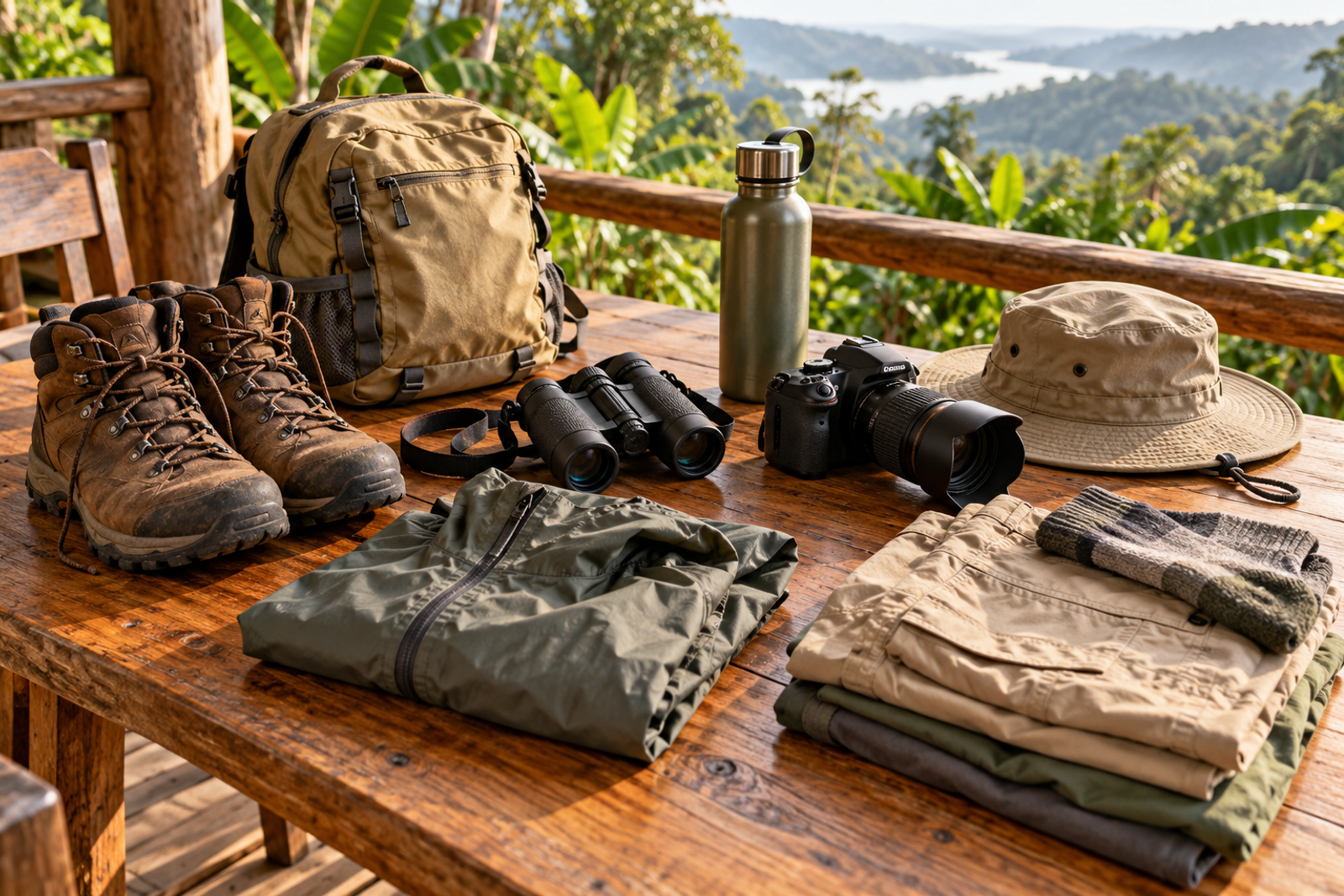
Prepare for Uganda’s forests, wetlands and savannah with a practical packing guide covering clothing, footwear, binoculars, cameras and everyday safari essentials.
A practical Uganda safari packing list should prepare you for different environments without filling your luggage with unnecessary equipment. A journey combining birding, primate trekking and wildlife viewing may take you from wetland channels to forest trails and open savannah.
Comfortable footwear, adaptable clothing and protection from rain are useful starting points. Add binoculars, a manageable daypack and the personal essentials needed for your confirmed itinerary.
At Phenom Tours and Travel, we recommend checking your packing list against your actual activities, accommodation and transport arrangements before departure.
Pack for Your Itinerary
Begin with your daily programme rather than a generic shopping list.
Will you be walking in Bwindi, tracking chimpanzees in Kibale, taking a Mabamba boat excursion or spending mornings on game drives? Each activity places different demands on your clothing and equipment.
Also check whether your safari includes domestic flights. Baggage allowances and bag requirements depend on the airline and service booked.
You do not need a completely new safari wardrobe. Comfortable items you already own may be suitable, provided they match the activities and conditions.
Clothing for Forest Walks and Wildlife Drives
Choose clothing that allows easy movement and can be layered.
Useful items include:
- Lightweight long-sleeved shirts.
- Comfortable long trousers for forest walks.
- A light fleece or other warm layer.
- A waterproof jacket.
- Several pairs of comfortable walking socks.
- Simple clothes for evenings and transfer days.
- A sun hat and sunglasses.
Muted colours are practical for nature activities. Avoid bulky clothing that makes walking uncomfortable or takes a long time to dry.
Keep a dry change of clothes available after wet or muddy excursions. Ask about laundry arrangements rather than assuming every lodge offers an immediate service.
Footwear for Gorilla and Chimpanzee Activities
Bring walking boots with a reliable grip that you have already worn comfortably.
Forest routes may involve mud, roots and uneven ground. New boots can cause discomfort, so test them before travelling.
Pack spare socks and a lighter pair of shoes or sandals for your accommodation. Keep muddy footwear separate from clean clothing.
Gaiters and suitable gloves may be useful for some forest walks. Ask about their suitability and local availability before deciding whether to bring them.
For background on one of Uganda’s gorilla destinations, consult the Uganda Wildlife Authority’s official Bwindi Impenetrable National Park guide.
Binoculars for Uganda Birdwatching
Binoculars are one of the most useful items for a birding safari. They also help with observing mammals from a distance during wildlife drives and boat excursions.
Bring a pair you can hold comfortably and focus quickly. Practise adjusting them before your trip, especially if you wear glasses.
A secure strap, protective case and lens cloth are useful additions. If possible, each keen birder should have their own pair so that brief sightings are easier to enjoy.
Do not assume binoculars or specialist equipment are included in your safari. Confirm availability before travelling.
Our 15-Day Uganda Birding and Wildlife Safari combines different habitats, making comfortable, familiar equipment particularly valuable.
Cameras and Protection From Moisture
Bring camera equipment that suits both your interests and your ability to carry it.
A long lens can help with distant birds, but a heavy setup may become tiring on forest walks. Consider the balance between photographic reach, weight and ease of use.
Useful accessories include:
- Spare batteries and memory cards.
- A rain cover or waterproof protective bag.
- A clean lens cloth.
- A secure camera strap.
- Suitable chargers.
- A separate backup method for important photographs.
Keep equipment protected during transfers and boat excursions. Follow your guide’s instructions when taking photographs, and never pressure wildlife to move for a better view.
Ask about support equipment before bringing a tripod or other bulky accessories. Practicality depends on the activity and transport arrangements.
Your Daypack for Forest Excursions
Use a comfortable daypack large enough for essentials without encouraging unnecessary weight.
Depending on the activity, it may carry your rain jacket, drinking water, packed meal, camera protection and personal items.
A waterproof liner or dry bag helps protect the contents. Keep frequently needed items accessible so you do not have to unpack everything on a narrow trail.
Ask about porter assistance where available. Confirm arrangements and charges beforehand, and avoid assuming assistance removes the need to prepare for walking.
Our 6-Day Uganda Ultimate Primates and Tree-Climbing Lions Safari combines forest activities and wildlife viewing, so an adaptable daypack is useful throughout the journey.
What to Bring for Boat Excursions
For wetland and river activities, protect phones, cameras and important documents from splashes and rain.
Bring a hat, drinking water and appropriate sun protection. Secure loose items before boarding and keep your luggage manageable.
Confirm life-jacket arrangements and follow the operator’s instructions. Tell us in advance if you need assistance getting into or out of a boat.
A boat excursion does not always provide the same space or seating as a safari vehicle. Discuss mobility needs and photography equipment before the activity is booked.
Documents and Personal Essentials
Keep important travel information organised and accessible.
Your preparation may include:
- Passport and applicable entry documents.
- Travel insurance details.
- Confirmed flight information.
- Safari itinerary and booking contacts.
- Copies of essential documents stored securely.
- Personal medication and necessary supporting documents.
- Any activity or health documentation specifically required for your journey.
Entry, airline and activity requirements should be checked for your nationality and travel dates. This packing guide is not a substitute for current official requirements or personalised medical advice.
The Uganda Tourism Board’s official Explore Uganda website provides links to travel-planning resources.
Charging and Everyday Electronics
Check your devices, chargers and accommodation arrangements before departure.
Carry the appropriate plug adapter and confirm that each device supports the available electricity supply. An adapter changes the plug connection; it does not necessarily convert voltage.
A power bank can be useful where charging opportunities are limited. Follow your airline’s current rules for batteries and portable charging devices.
Download essential booking information for offline access. Do not rely entirely on mobile reception or lodge Wi-Fi.
Clothing for Community Experiences
Pack comfortable everyday clothing suitable for meeting local hosts, walking through villages or joining the activities described in your itinerary.
Ask about expectations for any particular visit. Practical footwear and clothing that allows easy movement are usually more useful than elaborate outfits.
Request permission before photographing identifiable people. Gifts or donations should be discussed with the hosts or organiser rather than distributed without guidance.
Our 14-Day Uganda Birding, Primates, Wildlife and Community Safari combines several activity types, so versatile clothing helps keep packing manageable.
What Can You Leave Behind?
Avoid packing expensive equipment simply because it appears on a safari checklist.
You may not need several large lenses, multiple pairs of heavy shoes or a different outfit for every day. Ask about laundry, equipment arrangements and luggage space before adding more.
Do not assume equipment such as drones can be used freely. Obtain confirmation of applicable permissions and operator arrangements before bringing specialist items.
Leave space for keeping wet or dirty clothing separate from clean items during the journey.
Your Final Packing Check
A few days before departure, review the confirmed itinerary and ask:
- Are my walking shoes comfortable and already tested?
- Can I protect my equipment from rain?
- Do I have the documents needed for my booked activities?
- Have I checked luggage restrictions for every flight?
- Have I discussed mobility, dietary or other important needs?
- Do I know which items and services the operator provides?
A shorter, well-considered packing list is often easier to manage than a bag filled with items you may never use.
Prepare Your Safari With Phenom Tours and Travel
Send us your travel dates, planned activities and any questions about clothing, equipment or luggage.
Tell us if you are a specialist birder, photographer or first-time forest trekker so we can discuss preparation for your itinerary.
Phenom Tours and Travel arranges budget, mid-range and luxury journeys combining Uganda’s birds, primates, wildlife and community experiences.
Email: info@phenomtoursandtravel.com
WhatsApp: +256 764 388 326