
Tanzania Birding & Wildlife
Birdwatching in Tanzania: A Safari Guide to Lakes, Woodlands and Savannah
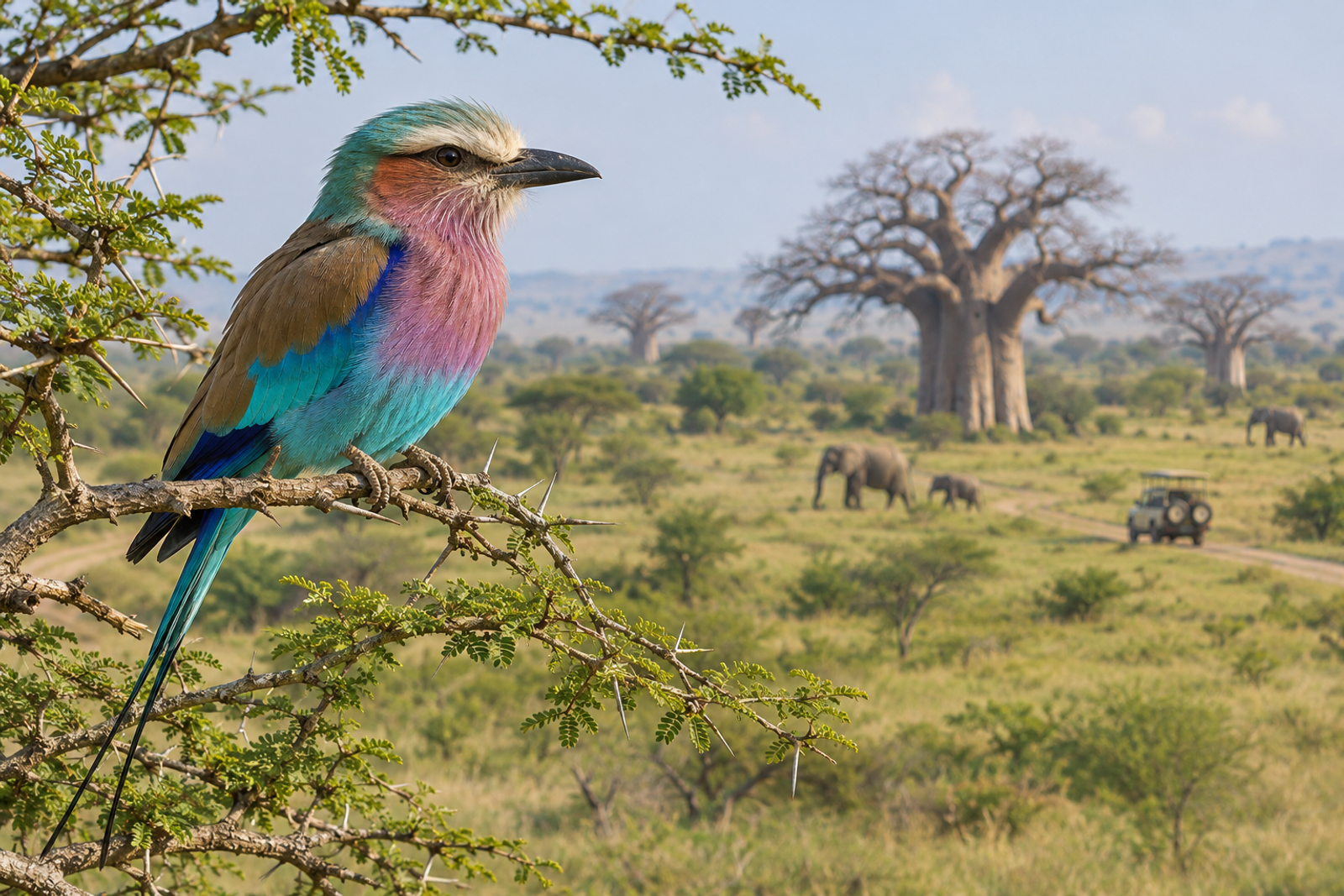
Discover Tanzania through its remarkable birdlife. Explore the woodland of Tarangire, the lakeside habitats of Manyara and the open Serengeti plains, with practical advice for combining birdwatching, wildlife viewing and community experiences
Discover the Smaller Details of a Tanzania Safari
Birdwatching in Tanzania brings a different rhythm to a safari. Between elephant encounters and sweeping landscape views, birds invite you to stop, listen and look more closely.
A colourful roller perched beside the track can hold your attention just as completely as a distant lion. Watching a bird build a nest, hunt insects or defend its territory adds another layer to the journey.
You do not need specialist knowledge to enjoy these encounters. With binoculars, an attentive guide and a little patience, beginners can discover how rewarding birdwatching becomes.
For experienced birders, the planning starts with habitats and target species. For first-time visitors, a balanced wildlife itinerary with dedicated birding stops offers a comfortable introduction.
Tarangire: Explore Beyond the Elephant Sightings
Tarangire makes a rewarding addition to a Tanzania birding route. Tanzania National Parks highlights the park’s rich resident breeding birdlife alongside its better-known wildlife attractions. tanzaniaparks.go.tz
Give your guide time to explore different habitats rather than concentrating entirely on large mammals. Scan branches, watch the ground beneath trees and pause when calls reveal activity that you cannot immediately see.
A useful approach is to spend several minutes observing one area. Birds that initially remain hidden may begin moving once the vehicle stops and everyone settles.
If photography matters to you, explain this before the drive. Identifying a bird and positioning a vehicle for a clear photograph require different amounts of time.
Lake Manyara: Add Lakeside Habitats to Your Route
Lake Manyara introduces a different birdwatching setting. Tanzania National Parks reports more than 400 bird species and identifies the lake as an important feeding area for lesser flamingos. Lake Manyara National Park
However, avoid building your expectations around a photograph of enormous flamingo flocks. Ask about recent conditions, accessible viewpoints and the proposed birdwatching route before your visit.
Allow your guide to explore more than the shoreline. Different vegetation and feeding areas can make the visit rewarding even when a particular waterbird spectacle does not appear.
Read the official Lake Manyara National Park information for an introduction to the destination.
Serengeti: Look Beyond the Migration
The Serengeti offers much more than its famous grazing herds. UNESCO records over 500 bird species that occur permanently or seasonally within the park. UNESCO World Heritage Centre
During a game drive, pay attention to the space between major wildlife sightings. Scan exposed perches, watch birds moving through the grass and ask your guide about those circling overhead.
For groups with mixed interests, alternate mammal viewing with short birdwatching stops. This creates a varied experience without making the day feel like a specialist survey.
Experienced birders should request suitable guiding when booking. A general wildlife safari may provide enjoyable bird encounters, but a dedicated birding trip needs a schedule and guide matched to that purpose.
The UNESCO Serengeti overview provides further background on the park’s conservation importance.
Choose Your Route by Habitat
A good birdwatching itinerary introduces variety while allowing enough time to observe.
Instead of adding destinations simply to increase the number of place names, discuss how each stop contributes to the trip.
Area to discuss
Birdwatching emphasis
Planning priority
Tarangire
Woodland and savannah exploration
Allow unhurried stops
Lake Manyara
Lakeside and surrounding habitats
Check current access and conditions
Serengeti
Open-country birding alongside wildlife
Allow adequate exploration time
Accommodation grounds
Short observation sessions where permitted
Confirm safe walking areas
Browse the available safari tour packages, then ask which routes can accommodate your birdwatching interests.
What a Birdwatching Day Could Look Like
Start with an early outing, allowing time to listen and observe before focusing on photography or a checklist.
During the morning, explore a manageable area rather than rushing between distant sightings. Ask your guide to explain identification features such as shape, movement, bill size and habitat.
Take a proper break around lunch. Where permitted, a quiet observation session from a designated picnic area or accommodation viewpoint can add interest without another long drive.
Use the afternoon for a different habitat or a combination of birds and larger wildlife. In the evening, review your notes with the guide while the details remain fresh.
The exact schedule should follow park rules, travel distances and local conditions.
Keep a Birding Safari Within Your Budget
Birdwatching does not automatically require luxury accommodation or an elaborate itinerary. Your guide, route and available observation time deserve careful attention.
To manage costs:
- Choose fewer overnight bases. Reduce packing and transfer time.
- Compare guiding options. Confirm whether specialist birding expertise is included.
- Check shared departure expectations. Other travellers may prefer general wildlife viewing.
- Consider accommodation location. Ask about safe opportunities to observe birds on the grounds.
- Clarify extra activities. Guided walks and community excursions may carry separate charges.
For a wider journey, explore the available East Africa destinations before deciding how much time to allocate to Tanzania.
Add Community Experiences With Local Guides
A locally hosted nature walk can introduce the landscape beyond national park boundaries. Depending on the confirmed programme, a guide may explain local plants, land use and birdlife alongside everyday community activities.
Ask who hosts the experience, what the fee includes and how participants benefit.
Keep the visit conversational and respectful. Seek permission before photographing people, and avoid making promises about species that a local walk will deliver.
Pack for Comfortable Observation
Bring binoculars that you can hold comfortably for several minutes. Practise focusing them before the safari so that you can respond quickly when a bird appears.
Useful additions include:
- A regional field guide or identification app.
- A notebook for locations, behaviour and identification notes.
- Neutral-coloured clothing and comfortable shoes.
- A warm layer and lightweight rain protection.
- Spare camera batteries and protection from dust.
Observe birds without crowding them. Keep clear of nests, avoid disturbing roosts and follow your guide’s instructions. Good sightings should leave the birds free to continue their normal behaviour.
Plan Your Tanzania Birdwatching Safari
A rewarding birding holiday gives you time to notice, learn and enjoy the landscape. Share your experience level, photography interests and any target species before choosing the route.
Contact Phenom Tours and Travel with your dates, group size and budget. Request a Tanzania itinerary that balances birdwatching, wildlife and community experiences at a pace that suits you.